German Days, Months & Seasons (am, im & -tag)
June 5, 2026 • GermanNow • 4 minute read
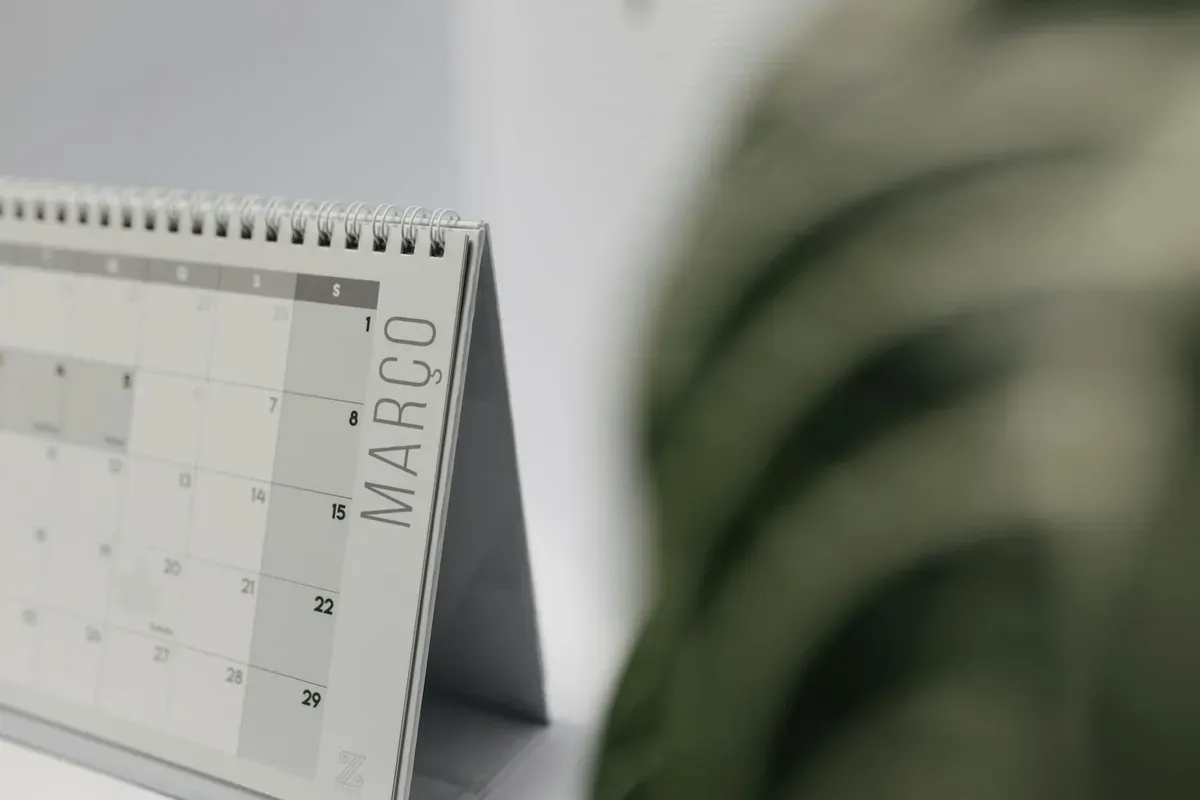
Table of Contents
You already know more German days than you think. Montag is Monday, Freitag is Friday — English and German share the same Germanic bones, so half the vocabulary is nearly free. The part that actually trips people up isn’t the words; it’s the tiny preposition in front of them. Say “in Montag” or “am Juli” and a native speaker winces instantly. So this guide isn’t a word list to memorize — it’s a sentence-builder. By the end you’ll be able to say something like Am Samstag fahre ich im Sommer nach Berlin and have every little word in the right place.
The seven days (and the -tag pattern)
German weeks start on Montag (Monday), not Sunday — worth knowing when you read a German calendar or timetable. Six of the seven days end in -tag (“day”), which is the same building block as English -day. The lone rebel is Mittwoch (Wednesday), literally Mitte + Woche, “mid-week.”
| German | English | Hint |
|---|---|---|
| Montag | Monday | Mond = moon |
| Dienstag | Tuesday | not Donnerstag! |
| Mittwoch | Wednesday | “mid-week,” no -tag |
| Donnerstag | Thursday | Donner = thunder (Thor) |
| Freitag | Friday | mirrors Fri-day |
| Samstag | Saturday | Sonnabend up north |
| Sonntag | Sunday | Sonne = sun |
Two things to lock in. First, every day is masculine — der Montag, der Mittwoch — even the one without -tag; if German genders feel slippery, the der/die/das gender guide is the place to firm them up. Second, days are nouns, so they’re always capitalized. That feels odd if you’re coming from French or Spanish, which lowercase them.
Saying “on a day”: always am
To say something happens on a particular day, use am plus the day. That’s it — no extra article.
| German | English |
|---|---|
| Ich gehe am Samstag ins Kino. | I'm going to the cinema on Saturday. |
| Am Freitag habe ich frei. | I'm off on Friday. |
| Was machst du am Sonntag? | What are you doing on Sunday? |
Here’s the secret most lists skip: am is itself a contraction of an dem (dative). The article is already baked in, so “am dem Montag” double-counts it — just say am Samstag. For a stretch of days, swap am for the frame von … bis: Ich arbeite von Montag bis Freitag (“I work from Monday to Friday”) — no am, no article.
The twelve months (and always im)
German months are near-identical Latin borrowings, so you can read them on sight. All are masculine and capitalized, just like the days.
| German | English | Season |
|---|---|---|
| Januar | January | Winter |
| Februar | February | Winter |
| März | March | Frühling |
| April | April | Frühling |
| Mai | May | Frühling |
| Juni | June | Sommer |
| Juli | July | Sommer |
| August | August | Sommer |
| September | September | Herbst |
| Oktober | October | Herbst |
| November | November | Herbst |
| Dezember | December | Winter |
For months, the preposition flips to im (= in dem, dative again): Im Juli fahre ich nach Deutschland, Im August habe ich Geburtstag, Die Schule beginnt im September.
Enjoying this?
Dates and prepositions stick fastest with a little daily repetition. Grab our free PDF of the 100 most useful German words — sent straight to your inbox.
The four seasons — also im
Good news: the seasons follow the exact same rule as months, because they’re all masculine too. One preposition, im, covers both.
| German | English | Months |
|---|---|---|
| Frühling | spring | März–Mai |
| Sommer | summer | Juni–August |
| Herbst | autumn / fall | Sep–Nov |
| Winter | winter | Dez–Feb |
So you get Im Sommer mache ich Urlaub (“In summer I go on holiday”) and Im Winter fahren wir nach Bayern. Want to describe the weather? Each season has an adjective: sommerlich (summery), herbstlich (autumnal), winterlich (wintry), frühlingshaft (spring-like) — perfect for small talk like Es ist herbstlich heute.
The one rule that ties it all together
If you remember nothing else, remember this line:
am for days · im for months and seasons · um for clock times.
am Montag · im Juli · im Sommer · um drei Uhr. All three are dative contractions, and together they let you build a full when-sentence: Am Samstag um drei Uhr (“on Saturday at three o’clock”). The clock half of that trio gets its own walkthrough in the telling time in German guide, which finishes off the um piece.
”Every Monday”: the lowercase -s form
To say you do something every Monday, drop the am, lowercase the day, and add -s. This is the one time a day appears in lowercase, because it’s now an adverb, not a noun.
| German | English |
|---|---|
| Montags gehe ich schwimmen. | On Mondays I go swimming. |
| Ich arbeite sonntags nicht. | I don't work on Sundays. |
Writing dates
A German date is an ordinal number, so it pairs with am: am ersten Mai (“on the first of May”), am dritten Juli (“on the third of July”). Written numerically, the ordinal takes a period — 1. Mai reads as der erste Mai. If the ordinals feel shaky, build them up first with the numbers 1–100 counting guide; dates are just ordinals plus am.
You now have more than a list — you have the machinery to slot any day, month, or season into a real sentence. Pick this week’s plans and say them out loud: Am Freitag… im Sommer…. Try writing your own birthday as Mein Geburtstag ist am … Mai, and the pattern will be yours for good.
Quick check: am, im & the days
5 quick questions to see what stuck.
-
How do you say “on Saturday”?
Days take am (= an dem). Months and seasons take im; clock times take um.
-
Days, months, and seasons are always capitalized in German because they are nouns.
The one exception is the lowercase adverb form like montags (“on Mondays”).
-
Complete: “___ Juli fahre ich nach Deutschland.” (In July I'm going to Germany.)
Months take im (= in dem) — never am Juli.
-
Match each time word to the preposition it takes.
Tap a German word, then its English meaning to pair them.
German
English
-
Which day breaks the -tag pattern?
Mittwoch means “mid-week” (Mitte + Woche) — it's the only day without -tag.
Related Articles



Keep going with German.
Get our starter pack of the 100 most common words — and the occasional new lesson when one's worth reading.