German Numbers 1–100: Why 21 Is Said Backwards
June 5, 2026 • GermanNow • 6 minute read
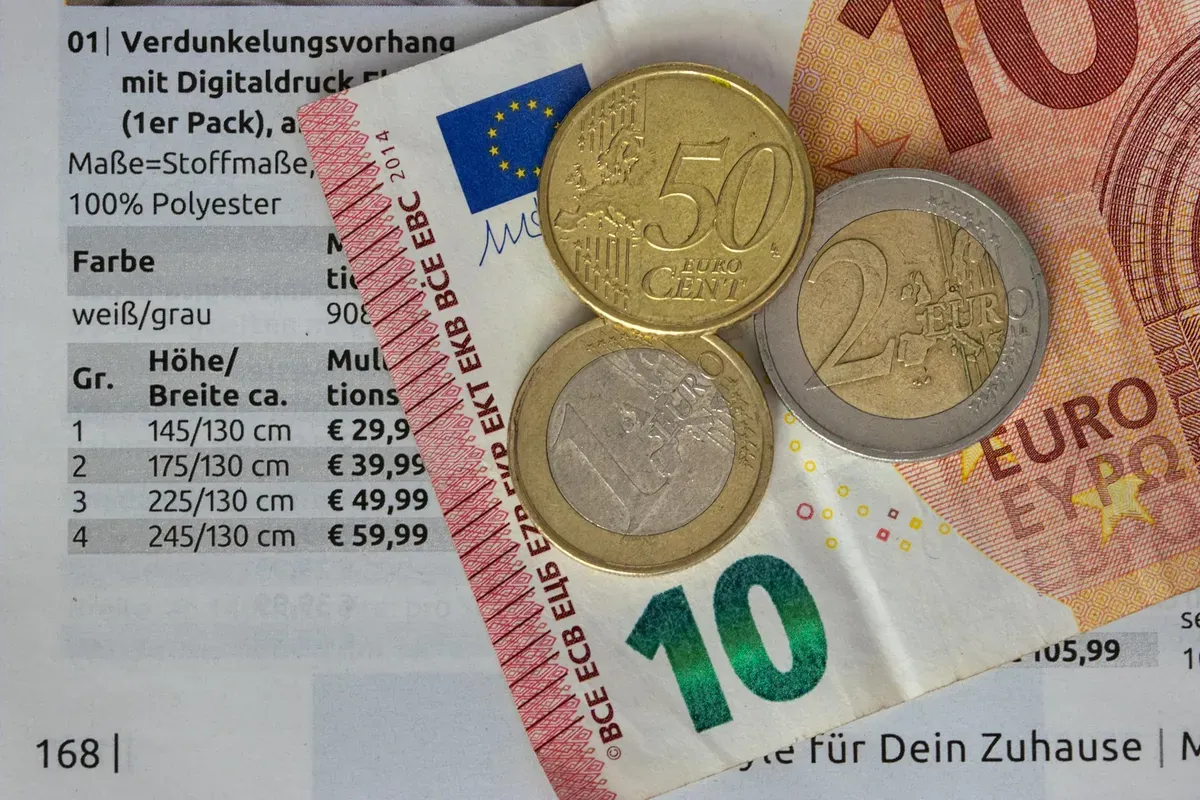
Table of Contents
You learn the numbers, you feel ready, and then a cashier rattles off a price and your brain locks up. You caught a “one” and a “twenty” in there somewhere — but which came first? Welcome to the single quirk that ambushes every English speaker learning German: the numbers come at you backwards. The good news is that it is not random, there are only a few irregular words to watch, and once you anchor on one little word — und — the whole system clicks. Let’s fix the two things that actually break you, then you’ll get a full 1–100 chart to keep.
First, the 12 words you must memorize
Everything in German counting is built from the numbers 0 through 12. There is no logic inside them — like English one, two, three, you simply learn them by heart.
| Numeral | German | English |
|---|---|---|
| 0 | null | zero |
| 1 | eins | one |
| 2 | zwei | two |
| 3 | drei | three |
| 4 | vier | four |
| 5 | fünf | five |
| 6 | sechs | six |
| 7 | sieben | seven |
| 8 | acht | eight |
| 9 | neun | nine |
| 10 | zehn | ten |
| 11 | elf | eleven |
| 12 | zwölf | twelve |
Notice that elf (11) and zwölf (12) don’t follow any pattern — they aren’t “einzehn” or “zweizehn.” They descend from Old High German words meaning “one left [over ten]” and “two left [over ten].” If that sounds familiar, it should: English eleven and twelve are irregular for exactly the same reason. German is not being difficult here — English does the identical thing.
Pronunciation quick wins
Three sound rules will make your numbers instantly more native. z is pronounced “ts,” so zwei is “tsvai,” not “zwai.” v is pronounced “f,” so vier is “feer.” And ü is a rounded vowel — say “ee” while pursing your lips for fünf (“fuenf”). Use the audio buttons below to train your ear; getting these three right early saves you from a lot of confused looks later.
The teens (13–19): almost regular
From 13 to 19 the pattern is simple: digit + zehn, written as one word. Crucially, the digit comes first here — dreizehn is “three-ten” — so the teens feel reassuringly close to English. The reversal hasn’t started yet.
| Numeral | German | English |
|---|---|---|
| 13 | dreizehn | thirteen |
| 14 | vierzehn | fourteen |
| 15 | fünfzehn | fifteen |
| 16 | sechzehn | sixteen |
| 17 | siebzehn | seventeen |
| 18 | achtzehn | eighteen |
| 19 | neunzehn | nineteen |
Two small traps: sechzehn (16) drops the s from sechs (it is never “sechszehn”), and siebzehn (17) drops the -en from sieben. Learn that shortening once, because the very same trick comes back at 60 and 70.
Why German says 21 backwards
Here is the centerpiece. For every number from 21 to 99, German says the ones digit, then und, then the tens — all as a single word with no spaces:
- 21 = ein und zwanzig → einundzwanzig (“one-and-twenty”)
- 42 = zwei und vierzig → zweiundvierzig (“two-and-forty”)
- 67 = sieben und sechzig → siebenundsechzig (“seven-and-sixty”)
- 99 = neun und neunzig → neunundneunzig (“nine-and-ninety”)
Watch the eins catch: standalone 1 is eins, but inside a number the -s drops and it becomes ein. So 21 is einundzwanzig, never “einsundzwanzig” — the same reason you say ein Euro, not eins Euro. This trips up every beginner exactly once.
So why backwards? It isn’t backwards — it’s old. German simply kept the original Germanic order that English used to share. Read “sing a song of sixpence… four and twenty blackbirds,” or Jane Austen’s “three and twenty,” and you’ll see English counted ones-first into the 1800s before it flipped. German never reformed the habit, partly because Luther’s hugely influential Bible translation wrote numbers this way. It also fits German’s love of putting the modifier first (as in und-linked compounds): einundzwanzig is “a twenty, modified by one.” The fix for your ear is mechanical: wait for the whole word, anchor on und, then flip the two halves.
The four irregular tens (20, 30, 60, 70)
The tens follow digit + -zig — but four of them misbehave. Flag these hard.
| Numeral | German | English | Watch out |
|---|---|---|---|
| 20 | zwanzig | twenty | special stem, not “zweizig” |
| 30 | dreißig | thirty | ends in -ßig (eszett), not -zig |
| 40 | vierzig | forty | regular |
| 50 | fünfzig | fifty | regular |
| 60 | sechzig | sixty | drops the s of sechs |
| 70 | siebzig | seventy | drops the -en of sieben |
| 80 | achtzig | eighty | regular |
| 90 | neunzig | ninety | regular |
| 100 | hundert | one hundred | also einhundert |
Notice the pattern: the same roots that misbehave in the teens misbehave here. Learn the sech-/sieb- shortener once and it covers 16, 17, 60, and 70 together. And 100 is hundert — you’ll often hear it alone, without ein.

Enjoying this?
Numbers stick fastest with daily reps. Grab our free PDF of the 100 most useful German words — pronunciation included, sent straight to your inbox.
Surviving prices at native speed
The most dangerous pairs for your ear are sechzehn (16) vs. sechzig (60), and siebzehn (17) vs. siebzig (70). The stems are identical — the ending carries the whole meaning: -zehn is longer (“tsayn”), -zig is shorter (“tsikh”). Mishearing 16 for 60 at a market is a real money mistake, so train your ear on the endings, not the start.
German writes prices with a decimal comma (3,99 €) and speaks them as euros, then cents, usually skipping any word for the decimal. The cents are themselves a reversed two-digit number, so a price stacks two reversals in one breath — which is exactly why prices feel so fast.
| German | English | Written |
|---|---|---|
| fünf Euro neunundneunzig | five euros ninety-nine | 5,99 € |
| vierundzwanzig Euro fünfzig | twenty-four euros fifty | 24,50 € |
| drei Euro neunundneunzig | three euros ninety-nine | 3,99 € |
Say it yourself: fünf Euro neunundneunzig is just two numbers in a row — no “comma,” no “point.” Knowing your currency word, Euro, plus the reversal rule gets you through almost any checkout. If shopping and small talk are your goal, the German tipping and etiquette guide for travelers pairs well with this, and a polite bitte at the right moment smooths the whole exchange.
Bonus: years and phone numbers
Years up to 1999 use the hundred construction: 1984 is neunzehnhundertvierundachtzig (“nineteen-hundred-four-and-eighty”). From 2000 on, switch to the thousand form: 2025 is zweitausendfünfundzwanzig. Phone numbers are usually read in digit pairs — each pair reversed, of course — so the inversion bites there too. Same rule, more practice.
Common mistakes to avoid
- Saying the tens first. “Zwanzigeins” for 21 — wrong. It’s einundzwanzig, ones digit first.
- Keeping the -s on eins. “Einsundzwanzig” — wrong. Inside a number, eins becomes ein.
- Adding spaces or hyphens. “Ein und zwanzig” — wrong. It is one solid word.
- Mishearing 16 as 60. Listen for the ending: -zehn vs. -zig.
- Over-regularizing. It’s elf, zwölf, sechzehn, siebzehn, zwanzig, dreißig, sechzig, siebzig — not the “logical” forms.
- Forgetting -ßig on 30. It’s dreißig with an eszett, not “dreizig.”
Counting is muscle memory, so don’t just read the chart — say prices out loud until the flip is automatic. Try reading every price tag you see today as a German number, anchor on und, and let the reversal become a reflex. When you’re ready for the next building block, the guide to memorizing German vocabulary fast will help these stick for good. You’ve got this — eins, zwei, drei, los!
Quick check: can you count in German?
4 quick questions to see what stuck.
-
How do you say 21 in German?
Ones digit first, then und, then the tens — and eins drops its -s to ein inside a compound.
-
German teen numbers (13–19) are also said backwards, like the 20s and 30s.
Teens put the digit first naturally (dreizehn = three-ten), so they feel familiar. The reversal only starts at 21.
-
Write 30 in German (watch the spelling).
It ends in -ßig (eszett), not -zig — and it is never dreizig.
-
Match each German number to what trips learners up.
Tap a German word, then its English meaning to pair them.
German
English
Related Articles



Keep going with German.
Get our starter pack of the 100 most common words — and the occasional new lesson when one's worth reading.